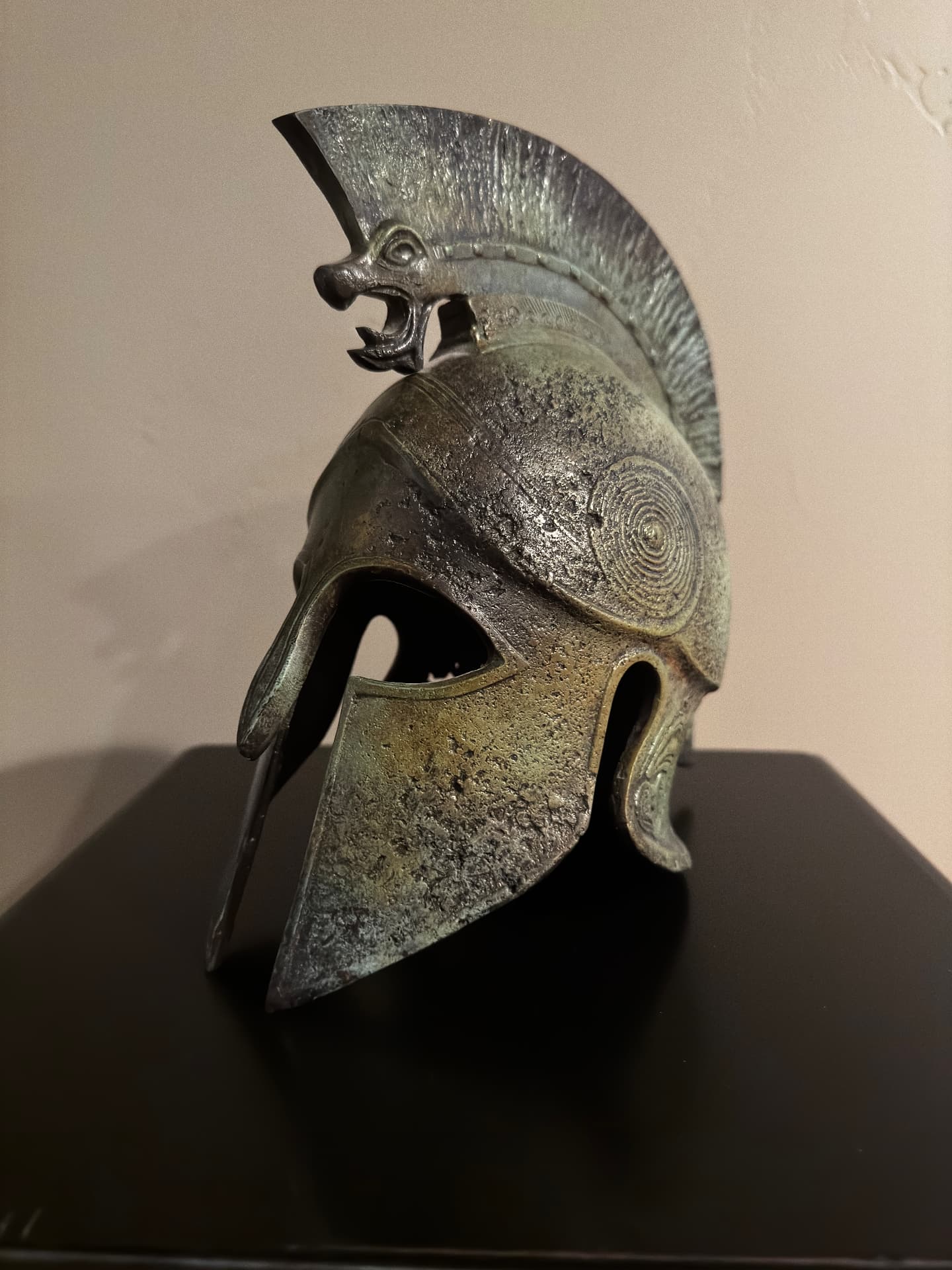
When we hear the word strategy, most of us immediately think of the military. Generals studying maps. Campaigns being planned. An enemy's next move being anticipated across a table covered in terrain models and unit markers.
There is a reason strategy is so closely associated with war. The stakes are absolute and the landscape of conflict between states and armies is genuinely complex. Strategy has been around as long as organized human conflict — as soon as groups of people started thinking carefully about what moves they would make in statecraft and battle, they were developing strategy. In our time, the word is used appropriately whenever someone is trying to achieve a goal when means and methods are finite and some kind of opposing or competing force exists.
It is worth making a serious study of strategy in war precisely because poor strategy costs lives. It determines whether an army survives, whether a nation falls, whether a civilization continues to exist. The consequences are immediate and irreversible. That reality forced military thinkers across centuries to develop principles that had to withstand the harshest possible test — the crucible of actual danger. Those principles are durable. They hold up in business, in careers, and in life for the same reason they held up on battlefields: human nature and the logic of competition do not change.
First Principles
One of the most fundamental strategic principles comes from Carl von Clausewitz, the Prussian general and military theorist whose work On War remains essential reading two centuries after it was written:
The best strategy is always to be very strong; first in general, and then at the decisive point.
At first glance the quote seems obvious. Of course you should be strong. Of course you should focus your strength where it matters most. It almost feels like no insight at all — the kind of thing you nod at and move past.
But I have spent years studying strategy, attending courses, reading the literature, and participating in serious discussions where the first half of Clausewitz's advice was barely mentioned. People eagerly discussed identifying decisive points, choosing among alternatives, assessing competitors, and allocating resources. Almost no one stopped to ask the more basic question that Clausewitz placed first:
Are we actually strong?
Strength was treated as an assumption rather than an objective. That is a mistake — and a common one.
Strength Then Decisive Points
Before deciding where to compete or where to apply force, the honest question is whether you are genuinely strong in the areas you believe you are and need to be. Not strong in theory. Not strong compared to where you were last year. Strong in the ways that will matter when the pressure is on.
Harvard Business Review published an article by Gary Hamel and C.K. Prahalad called "Strategic Intent" (originally published 1989) — one of the most useful strategic insights to emerge from the business world, and one that applies equally well to an individual career, a nation, or an organization of any size. I recommend it enthusiastically. Its core argument lives squarely in the first part of Clausewitz's principle: Strength. It is about being absolutely clear on where you want to be strong, and letting that strategic intent drive every organizational decision you make — how you invest, who you hire, what you build, what you abandon.
The logic is this: if you have done the hard work of building genuine strength in two or three areas before a competitive moment arrives, you will be positioned to apply that strength at decisive points when you see weakness or opportunity in the market or the field. You will not be scrambling to build capability under pressure. The strength will already exist. The application of that strategy to a decisive point — fast and merciless.
Two Principles. One Strategy.
Clausewitz was not offering two separate ideas. He was describing a sequence. First, become strong. Then apply that strength at the decisive point. Both parts are required. A strategist who identifies the right decisive point but arrives there weak has planned a defeat. A strategist who builds great strength but never applies it decisively has built something impressive that accomplishes nothing.
It is only when both principles work together that strategy becomes more than planning. It becomes the disciplined application of advantage.
So before the next time you sit down to think about strategy — for your business, your team, your career, or anything else worth competing for — start with Clausewitz's first point, not his second.